Last updated: September 29, 2026 · By Joe Ghafari, CEO of Visiting Wrld
The short answer: Making gay friends as an adult is harder than it should be, and it is not because something is wrong with you. The places gay men are told to meet each other were mostly built for dating or drinking. Friendship needs something they rarely give you: the same people, again and again, with nothing on the line. Fix that one thing and most of the rest follows.
I host gay men's retreats, and on our application calls the thing men say they want most is not a better body. It is friends. Guys with a good job, a gym routine and a phone full of chats still tell us some version of "I don't really have my people." So this is the honest version: why gay loneliness is so common, how long friendship actually takes, where gay men really make friends, and how to turn a good first conversation into someone you text on a Tuesday.
Why gay loneliness is so common
You are not imagining it. In AARP's 2025 national survey of midlife and older Americans, 46% of LGBTQ+ respondents said they were lonely, against 40% of everyone surveyed. A 2025 study in Research on Aging, drawing on more than 93,000 older adults in the CDC's national health survey, found that gay and bisexual men reported more social isolation than straight men, and that relationship status explained part of that gap.
The reasons are not mysterious, and none of them are a character flaw.
- The default venues are built for something else. Apps are built around dating and hookups. Bars are loud, late and built around drinking. You can meet people in both, but it is hard to become friends with someone you can only talk to over the music at midnight.
- A lot of us started building our social lives later. If you came out after your straight friends had already found their crews, you may have skipped years of the easy school and teammate friendships, and now you are building a chosen family from scratch as an adult.
- Circles shrink when life gets busy. People pair off, move cities, change jobs. Everyone loses friends this way. If your circle was small to begin with, every move or breakup takes a bigger bite out of it.
- Judgment keeps some men out of gay spaces altogether. Many of the men we talk to have felt judged in the scene for their body, their age, their style or simply for not drinking. So they stop going, and the circle gets smaller again.
None of that is permanent. It just means the usual advice to "put yourself out there" is missing a step.
The math of friendship: why it takes longer than you think
Here is the number that changed how I think about this. Jeffrey Hall, a communication researcher at the University of Kansas, found that it takes roughly 50 hours of time together to go from acquaintance to casual friend, about 90 hours to become real friends, and more than 200 hours before someone is a close friend. Hours spent working together count for much less.
Now run that against your own calendar. If you meet a great guy at a party and see him for an hour once a month, you will be casual friends in about four years. That is not a failure of chemistry. It is arithmetic.
So the goal is not meeting more people. It is seeing the same people more often, somewhere you are not performing. Anything that puts you in a room with the same faces every week is worth more than ten one-off events.

Think a retreat like this could be your thing?
Train, travel, and connect with like-minded guys on a Visiting Wrld retreat.
Apply for your spotWhere gay men actually make friends
These are ranked by how reliably they give you repeat time with the same people, because that is the part that matters.
- Gay sports leagues and running clubs. The best option most men never try. Leagues like Stonewall Sports, with kickball, dodgeball, bowling and more in cities including Chicago, Philadelphia and Houston, and the National Gay Flag Football League put you on the same team every week for a whole season, plus the drinks or brunch after. Many cities also have a Front Runners club for LGBTQ+ runners and walkers. You do not need to be good. Most rec leagues care far more about you showing up than about the score.
- Your local LGBTQ+ community center. Centers run support groups, book clubs, game nights, hikes and volunteer shifts. If you do not know where yours is, CenterLink keeps a directory.
- Volunteering. Pride committees, charity walks, food banks, the front desk at your center. Working toward something together gives you a reason to talk and a reason to come back, and the friendship usually happens in the chat after the shift.
- Hobby groups. Board game nights, climbing gyms, book clubs, choirs, hiking groups. Look for the LGBTQ+ version of whatever you already like, on Meetup or through your community center.
- Apps, used honestly. Plenty of men do find friends on dating apps. Put what you want in the first line of your profile, suggest coffee or a walk instead of a drink, and let it be a friendship on purpose rather than a date that fizzled.
- Traveling with a group. A trip compresses time. Days of shared meals, excursions and downtime with the same people is exactly the kind of time Hall is talking about. If you are heading somewhere on your own, we wrote a whole guide on making friends when you travel solo as a gay man.
If you do not live in a big city. Most of the leagues and centers above cluster in bigger cities. If you are somewhere smaller, start online and aim offline. Gay men's groups on Reddit and Discord often organize meetups, and the nearest city's Pride events, sports tournaments and community center calendars are worth a monthly drive. One recurring trip into town does more than a year of scrolling.
If the bar scene is not your thing. You are far from the only one. A lot of the men we talk to want a social life that does not run on alcohol and late nights. Daytime options like run clubs, hikes, climbing gyms, weekend brunch meetups and volunteering are full of men who feel the same way. Choose the morning version of things and you will usually find them.
How to turn a first hello into a real friendship
Meeting someone is the easy part. The part most of us skip is the follow-up. A few habits that work:
- Ask twice. One invite is politeness. The second tells him you meant it. If he says yes to the second one, you are on your way.
- Make it a standing thing. "Want to grab coffee sometime" dies in the group chat. "Tuesday runs, 7am, want in?" actually happens. A recurring plan does the scheduling for you.
- Host. A potluck, a watch party, a Sunday brunch. Hosting puts you at the center of a small group instead of waiting to be invited into one, and it lets your friends meet each other.
- Say it out loud. Tell people you are trying to make more gay friends. It feels exposed, and it works, because most of them want the same thing and did not want to be the one to say it.
- Be the one who texts after. "That was fun, same time next week?" is the most underrated sentence in adult friendship.
Think a retreat like this could be your thing?
Train, travel, and connect with like-minded guys on a Visiting Wrld retreat.
Apply for your spotA four-week plan to get started
If all of this feels like a lot, here is the smallest version that works.
- Week one: pick one recurring thing. A league, a run club, a weekly game night, a volunteer shift. It has to meet at least every week or two, and it should be something you would enjoy even if nobody became your friend.
- Week two: go back. The first visit is always a little awkward. The second one is where people start to remember your name.
- Week three: ask one person to one thing. Coffee before the session, food after, a walk on the weekend. Keep it small and specific.
- Week four: ask again, and bring someone new. Invite the guy from week three to something else, and loop in one more person from the group. Two people make a plan. Three are the start of a crew.
Then keep going. By Hall's numbers you will not have a close friend in a month, but you will have started the clock, and that is the part most people never get to.
If you are in a relationship, this still applies to you
Loneliness is not only a single guy's problem. Plenty of partnered men realize their social life has quietly turned into their partner's friends, or just their partner. Friendships of your own are good for you and good for the relationship. And if you want to try something like a retreat together, couples are always welcome. Each of you fills out your own free application, which takes about two minutes.
When loneliness is more than loneliness
Sometimes loneliness sits on top of something heavier, like depression, anxiety or a rough stretch you cannot shake. If that is you, please talk to someone trained for it. The LGBT National Hotline at 888-843-4564 offers free, confidential peer support for LGBTQ+ people. If you are in crisis, call 988, the Suicide and Crisis Lifeline. A sports league, a community center or a retreat can help with loneliness, but none of them are a substitute for real care.
Where a retreat fits, and where it does not
I will be honest with you: a retreat is not the answer for everyone, and you should do the local things above either way. The friends who live near you are the ones who can show up on a Tuesday.
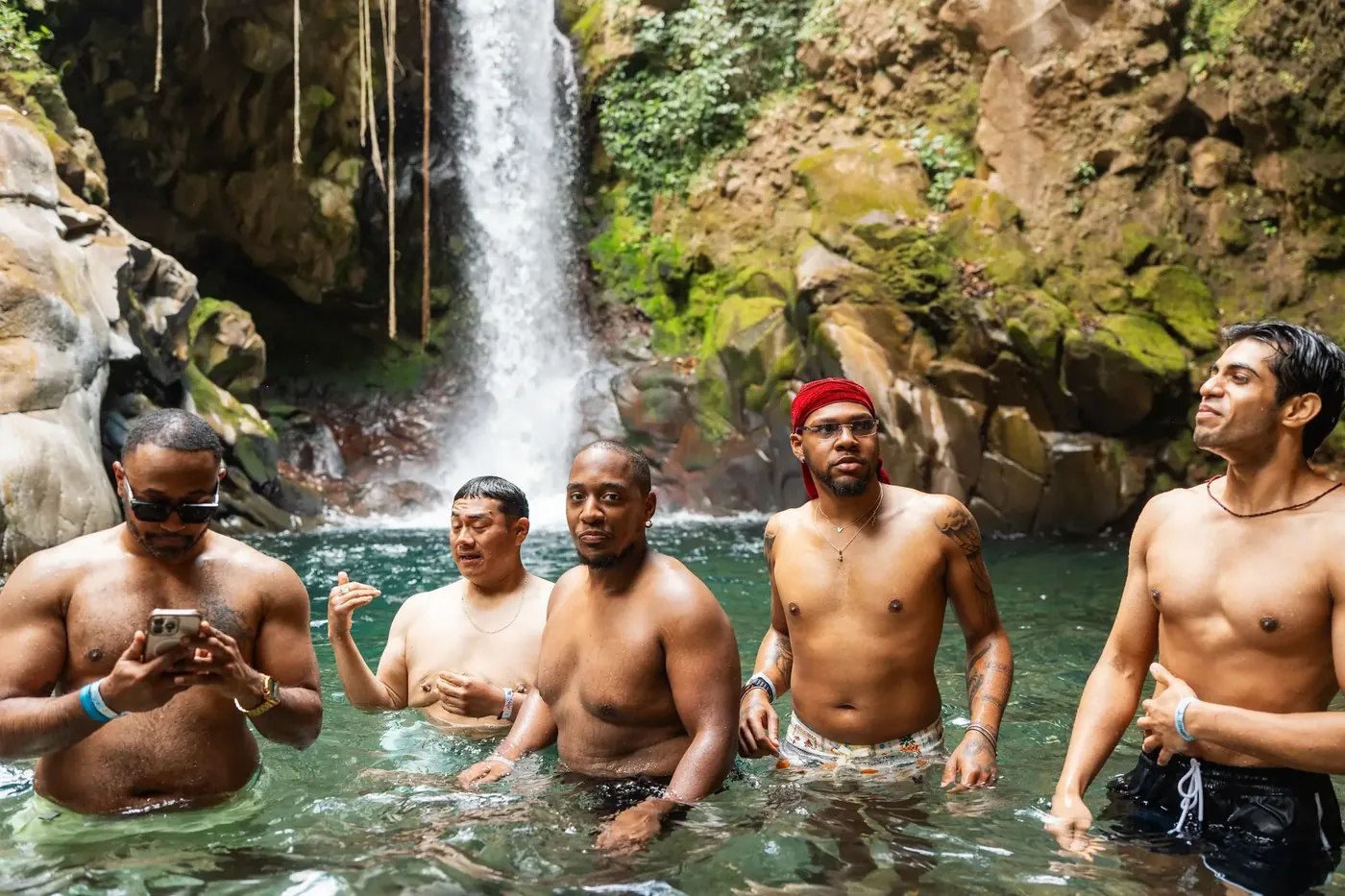
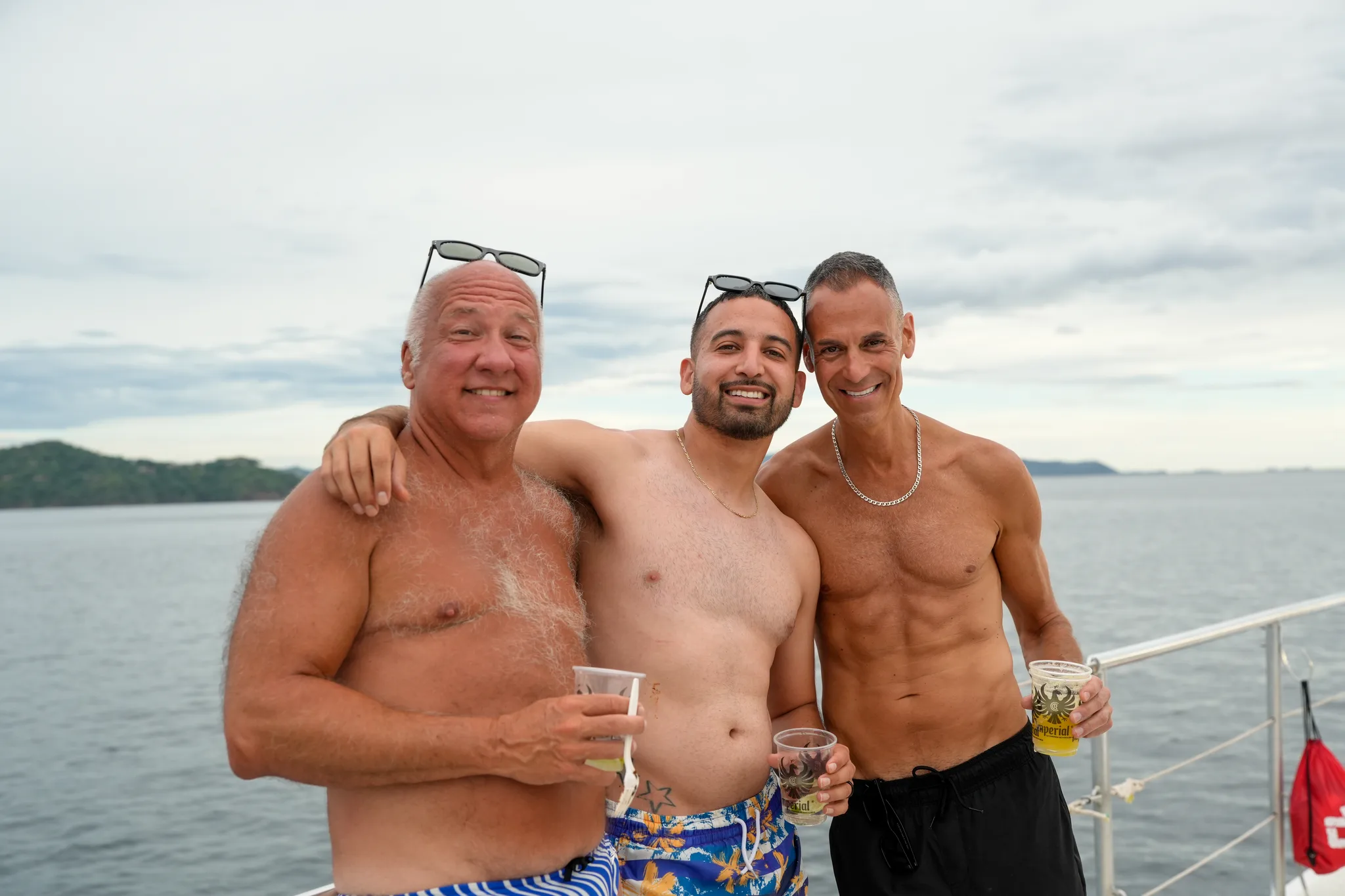
What a retreat does well is the thing Hall's research says is hardest to find as an adult: a lot of unstructured time with the same people. On our retreats that is six to nine days of training together at the gym, family-style meals, a private yacht and snorkeling day, and plenty of hanging around the villa pool with nothing scheduled. Most of the men who come, come on their own.
If that sounds like what you are missing, the retreat application call is a real conversation about whether it is a fit, with no pressure either way. A $500 deposit locks your spot when you are ready, and payment plans start as low as $250 a month. You can also read how our gay men's retreats work first.
The one thing to remember
Friendship is mostly repetition. Pick one thing that meets every week, go four times before you decide whether you like it, and invite one person to something twice. That is the whole plan, and it beats any app.
Sources: Jeffrey Hall's research on how many hours it takes to make a friend (University of Kansas), AARP's 2025 loneliness survey, Song and Zhao, "Perceived Social Isolation Among Older Lesbian, Gay, Bisexual, and Heterosexual Adults", Research on Aging (2025), the LGBT National Help Center, and the 988 Suicide and Crisis Lifeline, all read on September 11, 2026.